
How much does a prosthetic leg cost in South Africa?
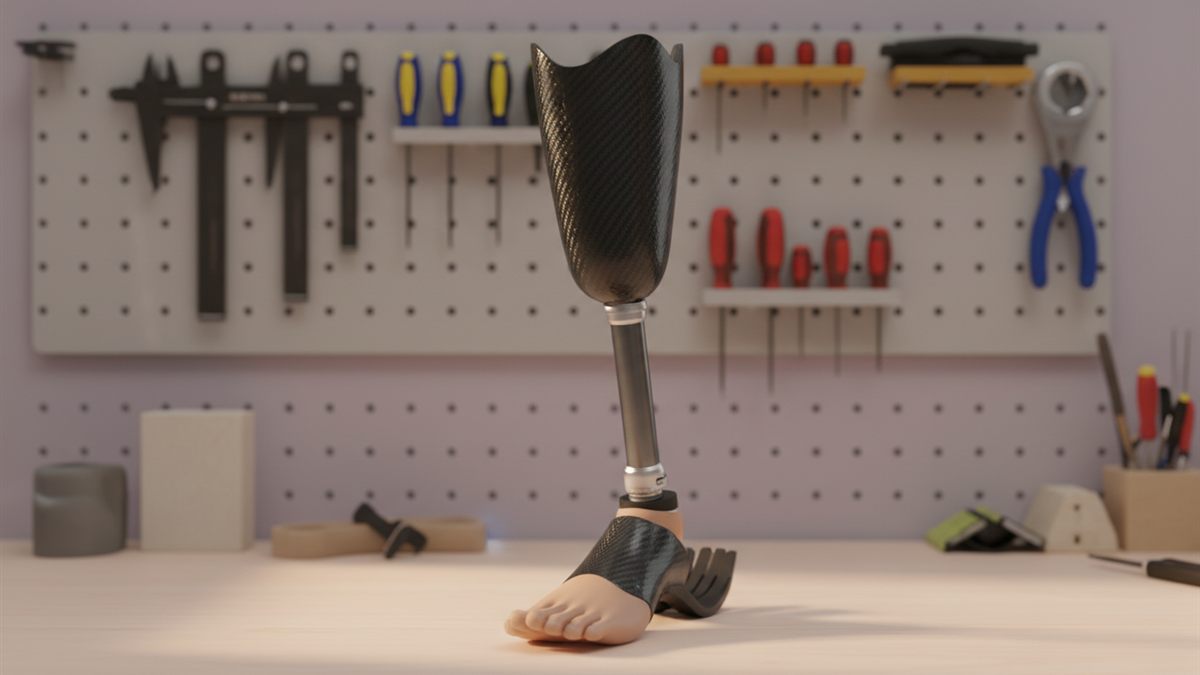
There is no single honest figure, and that is the real answer. A prosthetic leg is built, not bought off a shelf: the socket is made to your residual limb and carries most of the clinical time, while the components bought in from manufacturers, chiefly the foot and, for an above-knee limb, the knee joint, carry most of the hardware cost. An above-knee prosthesis costs more than a below-knee one because a knee joint is added to the build, and a microprocessor-controlled knee costs more than a simple mechanical one. We have chosen not to publish rand ranges for the limb itself, because the figures circulating on South African price-comparison pages are not attributed to any published survey and we will not repeat numbers we cannot stand behind. What is verifiable is the funding side: the South African Orthotic and Prosthetic Association states that the medical aid benefit "can range anything between R3,000 and a maximum of R55,000, excluding ex gratia or PMB" SAOPA. Every amputee's situation is different, and Farida Cajee-Botes provides a written, itemised quotation after a proper assessment rather than a quote from a website. Book an assessment to get figures specific to you.
What actually drives the price
A prosthetic leg is not one product but a system of parts, and the price reflects that. Ossur South Africa breaks the cost down into three broad categories: the custom-made socket (the part in contact with your residual limb, which takes clinical time and skill to fit properly), the mechanical or electronic components bought in from manufacturers such as the foot and, for above-knee limbs, the knee joint, and the recurring costs of adjustments and replacement roughly every five years as sockets wear and residual limbs change shape over time Ossur South Africa. A South African peer-reviewed study on lower-limb prosthetic care notes that prosthetists in the private sector typically use activity-level assessment tools, such as the Amputee Mobility Predictor, to match a patient to an appropriate componentry tier rather than defaulting to the most advanced (and most expensive) option available PMC/Canadian Prosthetics & Orthotics Journal.
Below-knee (transtibial) prostheses
For a below-knee amputation, the main cost drivers are the socket design and the type of prosthetic foot. A basic mechanical foot for level-ground walking sits at the lower end of the range, while carbon-fibre, energy-storing or hydraulic ankle-foot units used for more active lifestyles push costs toward the upper end. What drives the number is the socket and the foot, not a catalogue price. Liners, which support and protect the residual limb inside the socket, are a recurring cost on top of the initial build and are generally replaced on an annual basis, worth budgeting for alongside our compression and residual-limb management options.
Above-knee (transfemoral) prostheses and microprocessor knees
Above-knee prostheses cost more than below-knee ones for a straightforward reason: they need a knee joint as well as a foot, and that joint is one of the most technically complex, and expensive, components in prosthetics. A simple mechanical knee keeps costs closer to the lower end of the above-knee range, while a microprocessor-controlled knee, which uses onboard sensors and a computer to adjust resistance during walking in real time, sits at the top end. Our prosthetics service covers assessment, componentry selection and fitting for both below-knee and above-knee limbs, matched to your goals and, importantly, to what your funding route will support.
Funding routes: how South Africans actually pay for a prosthetic leg
Medical aid: Under the Medical Schemes Act, prosthetic and orthotic care linked to a Prescribed Minimum Benefit (PMB) condition (amputation is one of the roughly 270 conditions on the PMB list) should be funded by your scheme via a separate PMB benefit pool rather than out of day-to-day or savings benefits, although schemes vary in how consistently they apply this in practice Council for Medical Schemes SAOPA Steve Green Ortho. A South African study on private-sector prosthetic care found authorisation delays and inconsistent PMB application to be a genuine barrier for patients, which is why getting pre-authorisation motivated by your prosthetist early matters PMC/CPOJ.
Road Accident Fund (RAF): if the amputation followed a motor vehicle or pedestrian accident on a South African road, the RAF may cover future prosthesis costs as part of a Section 17(4)(a) undertaking for future medical expenses, in addition to any general damages claim; the Fund can pay providers directly once an undertaking is in place, though replacement is typically authorised roughly every five years rather than on demand Road Accident Fund SAOPA.
COIDA (workplace injuries): employees injured in a work-related accident are covered through the Compensation Fund, the Federated Employers' Mutual (FEM) for construction, or Rand Mutual Assurance (RMA) for mining and metals, depending on industry Department of Employment and Labour. The COIDA tariff list generally covers only basic prosthetic components, so higher-end components often need to be topped up through medical aid or private funds SAOPA.
Without a claim or scheme benefit: if none of the above apply, options include private savings, family or employer support, and disability insurance payouts, as well as nonprofit and community fundraising routes; the Amputee Coalition, an international limb-loss support organisation, maintains resources on grant and fundraising options that some patients find a useful starting point Amputee Coalition. We are happy to talk through which route applies to your situation and to prepare the supporting documentation and motivation your funder requires.
Getting an accurate cost for your situation
Because the residual limb, activity level, funder, and component choice all move the price, the only way to know your real cost is a proper assessment. Farida Cajee-Botes conducts these at the Morningside consulting rooms in Sandton or, where needed, via home and hospital visits across Gauteng, and provides a written, itemised quotation before any commitment is made, including guidance on which funding route is likely to apply and what documentation your medical scheme, the RAF or COIDA will need from us. You can read more about related lower-limb and residual-limb care under conditions we support.
When to see a prosthetist
If you have had, or are facing, a lower-limb amputation (whether from trauma, diabetes, vascular disease or another cause), it is worth arranging an assessment as early as possible, since componentry decisions and funding applications both take time to get right. This article is general information for South African readers and is not a substitute for individual clinical or financial advice; your circumstances, funder and residual limb will determine what is appropriate for you. Book an assessment with Farida Cajee-Botes to discuss your options and get a written quotation.
Key takeaways
- There is no single honest price for a prosthetic leg in South Africa. The socket is moulded for one person's residual limb and the components are chosen for how that person lives, so the cost is worked out per patient rather than read off a price list.
- This practice does not publish rand ranges for the limb itself. The figures circulating on South African price-comparison pages are not attributed to any published survey, and we do not repeat numbers we cannot stand behind.
- An above-knee prosthesis costs more than a below-knee one because a knee joint is added to the build. A simple mechanical knee costs less than a microprocessor-controlled knee, which adjusts resistance as you walk.
- Medical aid Prescribed Minimum Benefits (PMBs), the Road Accident Fund and COIDA are the three main funding routes in South Africa, each with different rules, tariffs and authorisation processes.
- Because so much depends on residual limb shape, activity level and funding source, a written itemised quotation after a proper assessment is the only reliable way to know your actual cost.
Have a question about your own situation?
Every device we provide starts with an individual assessment: at home, in hospital, or at the practice.
References
- Financial Considerations | Information for Amputees | Ossur South Africa (Ossur)
- Exploring the need for lower limb prosthetic guidelines in South Africa's private healthcare sector (Canadian Prosthetics & Orthotics Journal / PMC)
- PMB Conditions (Council for Medical Schemes)
- COIDA Service Book (South African Department of Employment and Labour)
- Claims FAQ (Road Accident Fund)
- Reimbursement & Funding Options (Steve Green Ortho)
- Reimbursement (South African Orthotic and Prosthetic Association (SAOPA))
- Financial Assistance for Prosthetic Services (Amputee Coalition)
- Reimbursement: medical aid benefits, PMB, ex gratia and RAF (South African Orthotic and Prosthetic Association (SAOPA))