
Custom Orthotics in Sandton
Supporting, aligning, and improving function for lasting independence
What is it?
Orthotics are externally applied medical devices designed to support, align, or improve the function of joints, muscles, and limbs affected by injury, neurological conditions, developmental delay, or musculoskeletal disorders.
How can it help?
- Improving walking pattern and posture
- Supporting weak or unstable joints
- Reducing pain during movement
- Preventing or slowing deformity progression
- Supporting neurological rehabilitation
- Improving balance and safety
- Assisting developmental milestones in children
Devices We Provide
A selection of the devices we fit within this service. Filter by area of the body to find what fits your needs. The right device is always confirmed after an individual assessment.
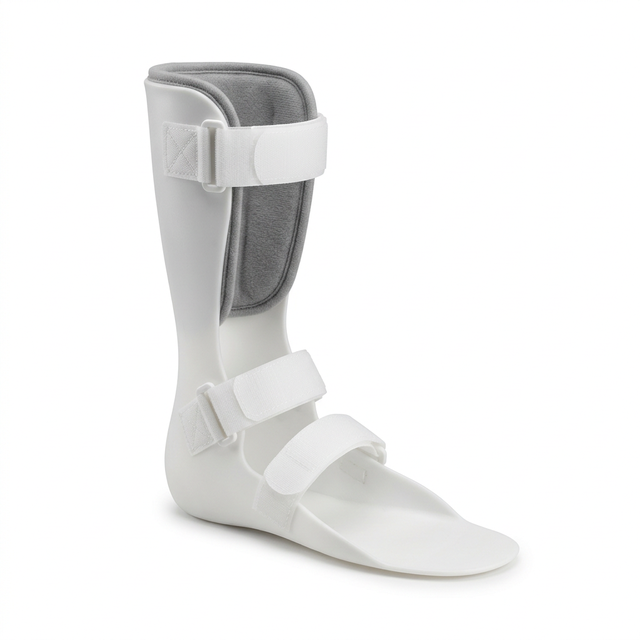
Custom Ankle-Foot Orthosis (AFO)
For drop foot, ankle instability or lower-leg weakness needing individually moulded lower-leg support.
A custom ankle-foot orthosis is individually moulded from a cast or scan of the patient's limb to support the ankle and foot during standing and walking. It helps control alignment and offers stability where muscles are weakened, supporting a more efficient walking pattern. Rigid, semi-rigid or flexible designs are selected to match each patient's level of support.
- Individually moulded to the patient's limb shape
- Rigid, semi-rigid or flexible upright options
- Can incorporate an articulating or fixed ankle joint
- Custom trim lines and padding for comfort
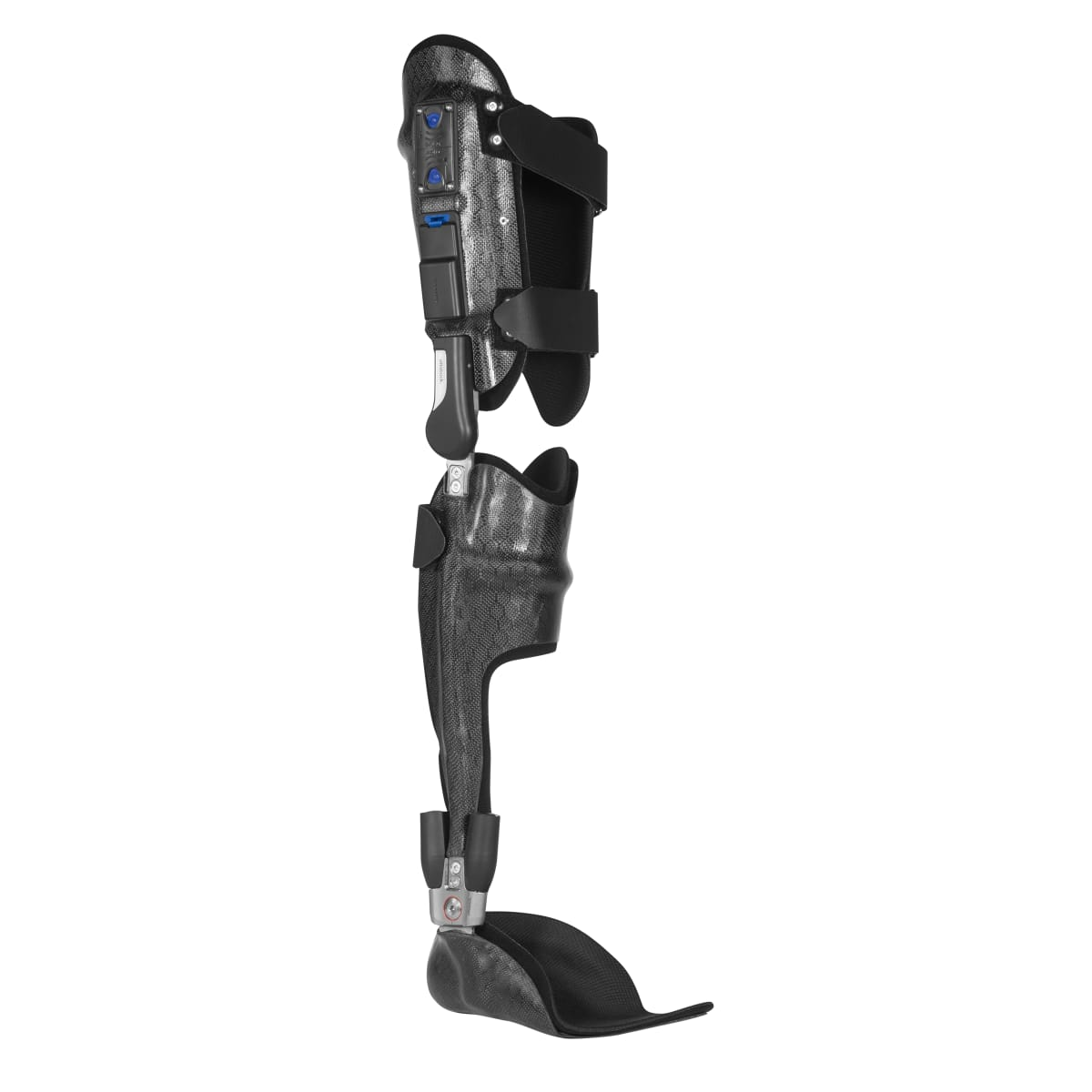
Custom Knee-Ankle-Foot Orthosis (KAFO)
For patients needing combined knee and ankle control when an ankle-level device alone is insufficient.
A custom knee-ankle-foot orthosis extends from the thigh to the foot and includes a knee joint to help control bending and straightening during standing and walking. It is built from a mould or scan of the individual limb to provide a supportive, precisely aligned fit. Knee joint mechanisms are selected according to each patient's stability and mobility needs.
- Custom-moulded thigh-to-foot construction
- Choice of locked, free-motion or stance-control knee joints
- Supports body weight during standing and walking
- Individually aligned to the patient's gait pattern
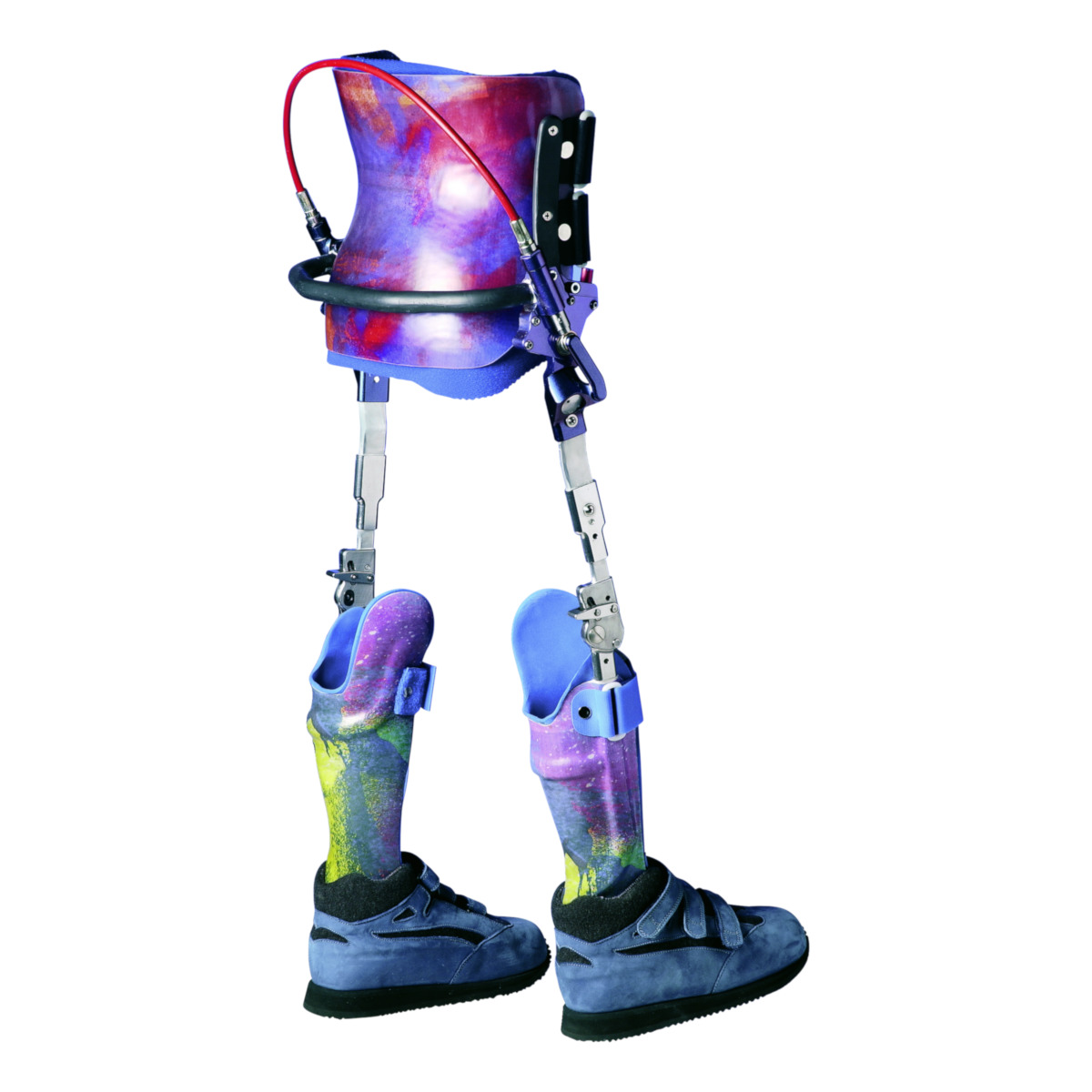
Custom Hip-Knee-Ankle-Foot Orthosis (HKAFO)
For patients whose instability extends to the hip and cannot be adequately managed by a knee-ankle-foot orthosis alone.
A custom hip-knee-ankle-foot orthosis is a full-length lower-limb brace extending from the pelvis to the foot, with an added hip joint to help manage leg rotation and positioning. It is used where standing and walking stability cannot be achieved with a shorter device. Each device is individually fabricated and aligned to the patient's gait.
- Full-length custom fabrication from pelvis to foot
- Hip joint helps control flexion, extension and rotation
- Combined with knee and ankle joint components
- Often paired with a pelvic band for added trunk control
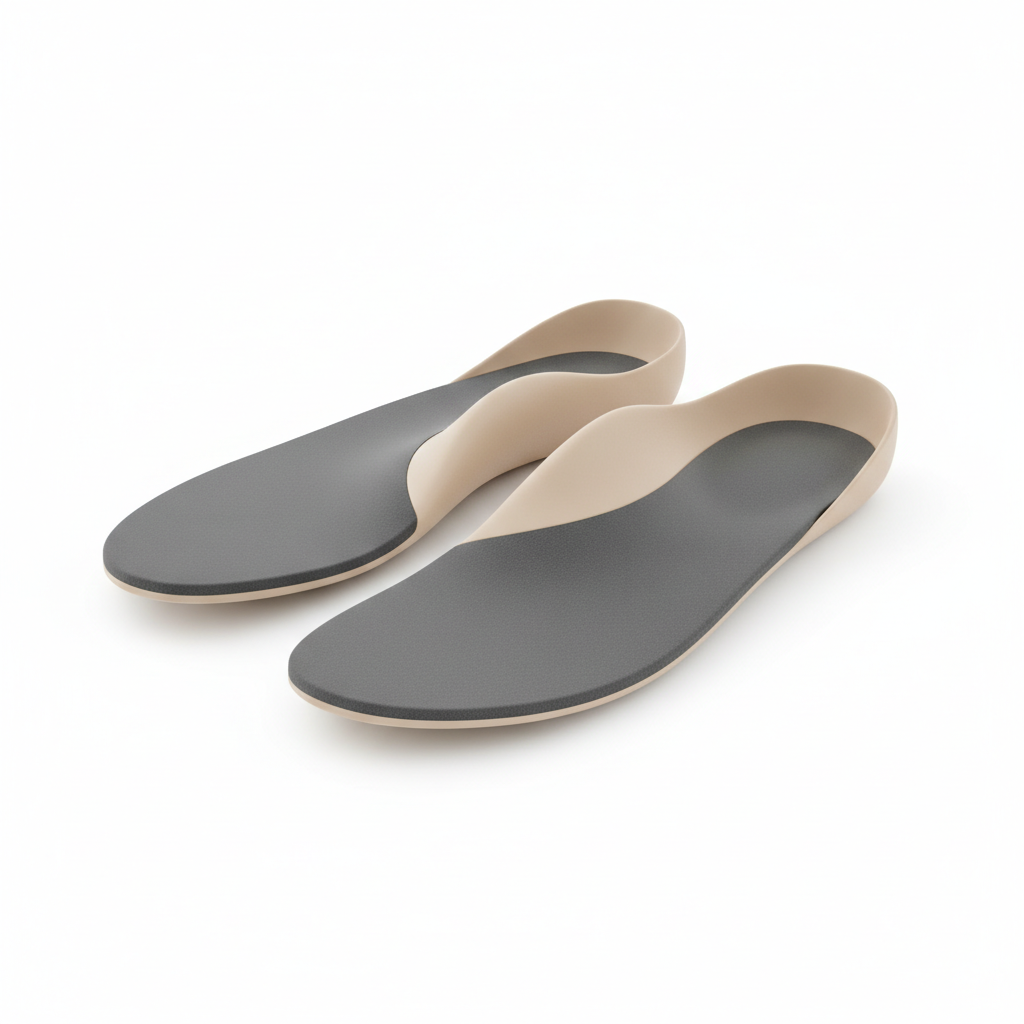
Custom-Moulded Foot Orthotics (Insoles)
For foot pain, deformity or abnormal loading patterns needing an insole shaped precisely to the individual foot.
Every insole we provide is custom-made following an individual assessment. Prefabricated insoles are not stocked. Each custom foot orthosis is individually moulded from a cast, foam impression or 3D scan of the patient's foot to help redistribute pressure and support the foot's natural alignment, built to the person's specific foot shape and prescribed correction, then fitted inside their own or recommended footwear.
- Individually moulded from a cast, impression or scan
- Helps redistribute plantar pressure to reduce localised strain
- Can incorporate posting or wedging for alignment support
- Available in a range of density materials for different needs
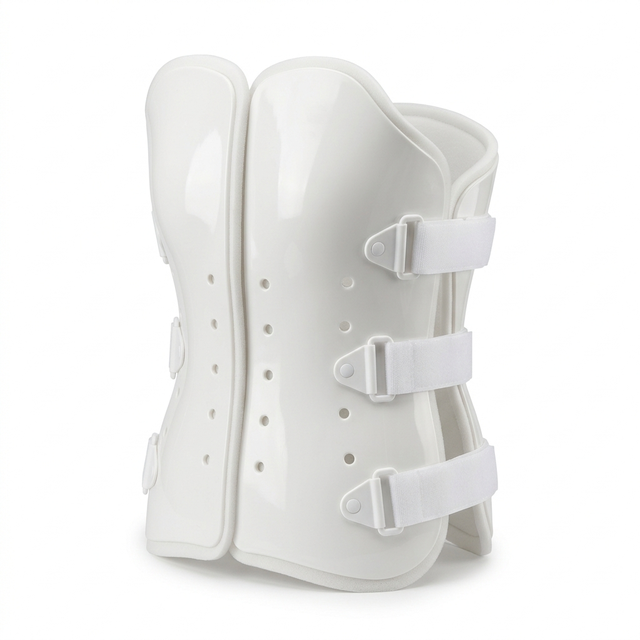
Custom Scoliosis Brace
For children and adolescents with a progressive spinal curve who may benefit from bracing during growth.
A custom scoliosis brace is an individually moulded rigid orthosis designed to apply corrective forces to the trunk to help manage curve progression during periods of growth. It is fabricated from a cast or scan of the patient's torso and requires regular review and adjustment as the child grows.
- Custom-moulded from an individual cast or scan
- Applies targeted corrective pressure points
- Designed for extended daily wear as prescribed
- Periodically adjusted or refabricated during growth
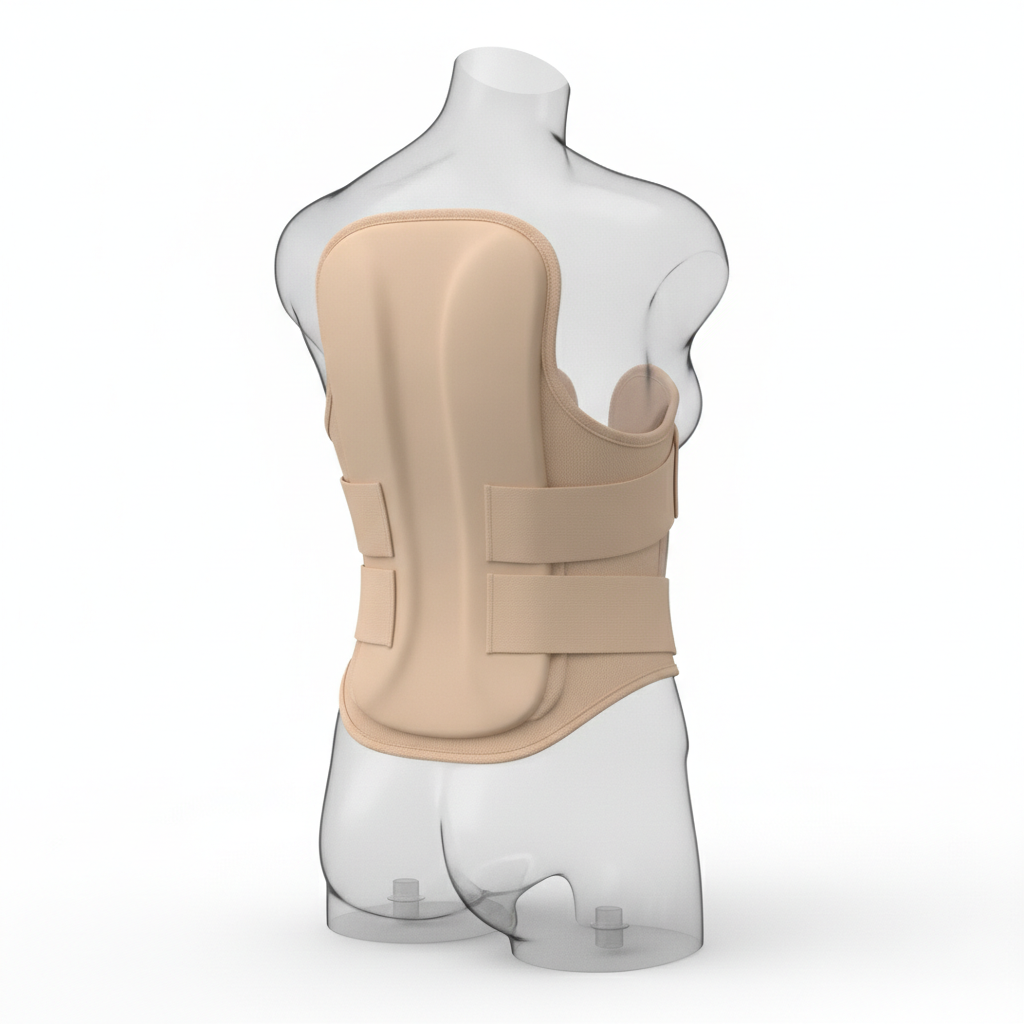
Custom Moulded Bennett Brace
For patients needing firm, custom-made lower-back and thoracolumbar support with a comfortable fabric front.
A Bennett brace is a custom-made spinal orthosis combining a rigid, individually moulded posterior frame (a pelvic band and thoracic band joined by paraspinal supports) with a strong fabric corset front that closes with wide adjustable straps. Moulded from a cast or scan of the patient's torso, it supports the spine and limits bending while remaining lower-profile and more breathable than a full rigid body jacket.
- Custom-made from a cast or scan of the torso
- Rigid posterior frame with a comfortable fabric corset front
- Wide adjustable front straps for a secure fit
- Lower-profile and more breathable than a full body jacket
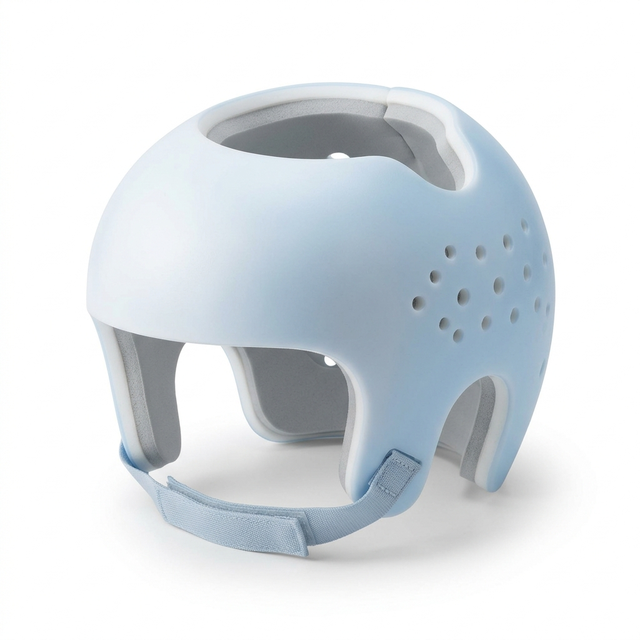
Cranial Remoulding Helmet
For infants with asymmetrical or flattened head shape who may benefit from gentle guided reshaping during a period of rapid skull growth.
A cranial remoulding helmet is a lightweight custom helmet, moulded from a 3D scan of the infant's head, that applies gentle, evenly distributed contact to help guide skull growth into a more symmetrical shape over time. It is worn for most of the day during a defined treatment period and adjusted as the head grows.
- Custom-moulded from a 3D head scan
- Lightweight, ventilated shell with soft inner lining
- Applies gentle, passive guidance rather than active pressure
- Requires periodic review and adjustment as the head grows
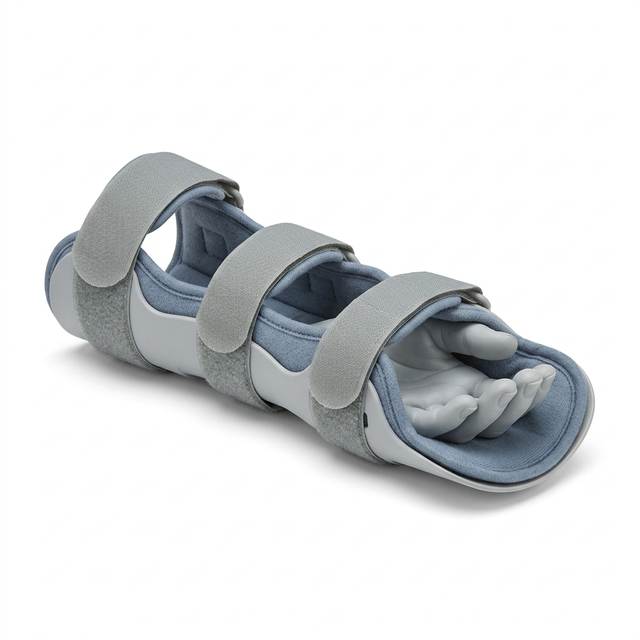
Custom Resting Hand/Wrist Orthosis
For patients needing the hand or wrist held in a specific individually moulded position, typically overnight or during rest.
A resting hand or wrist orthosis is individually moulded to hold the hand and wrist in a set position, most often to help prevent contracture or protect healing tissue. It is custom-shaped for a precise, comfortable fit and is usually worn overnight or during periods of rest.
- Individually moulded from a cast or thermoplastic sheet
- Holds the wrist and fingers in a defined resting position
- Padded for comfortable extended contact
- Adjusted as swelling or muscle tone changes
Our Clinical Approach
Every orthotic prescription begins with comprehensive assessment, understanding your functional goals, home environment, and real-life mobility demands. We design devices that support independence and integrate seamlessly into your daily routine.
Related reading
- Are Custom Orthotics Worth It?
The honest, evidence-based answer is: it depends on why your feet hurt. Here's when a pharmacy insole is genuinely enough, and when a clinician-assessed custom orthosis is worth the extra cost.
- How Much Do Custom Orthotics Cost in South Africa?
There's no single national price list for custom orthotics in South Africa. Pricing is built around your assessment, casting method and materials. Here's what actually drives the cost, and how medical aid funding for orthotic insoles usually works.
- Child Walking on Toes: When Should You Worry?
Toe walking, bow legs, knock knees and flat feet each have a normal age window, and most children grow out of them with no device at all. Here is what is developmentally normal, what genuinely warrants assessment, and what treatment involves when it is actually needed.
Ready to get started?
Contact us to book an assessment or discuss your needs
Common questions